 Whatapp: +86 189 2318 5391



How Heat Transfer Printing Works?
heat transfer printing is often misunderstood as a simple “print and press” process. For apparel brands, fabric buyers, sportswear suppliers, and custom garment projects, the real value is not only in putting a graphic onto fabric. The process helps turn digital artwork into repeatable fabric printing with clear color, controlled pattern placement, and a cleaner production flow.
When buyers do not understand how heat transfer printing works, sampling can easily slow down. Artwork may not be prepared correctly. Fabric may not match the expected effect. Color approval may take longer. For B2B orders, these small misunderstandings can delay bulk production and create extra communication between the brand, designer, and factory.
The Process Starts Before The Heat Press
The first step is not heating. It is confirming the artwork and fabric. Buyers need to provide the design file, color direction, print size, fabric type, and final application. Some buyers already have polyester fabric prepared, while others need the factory to help arrange the fabric before printing.
This early check matters because different fabrics respond differently to heat, pressure, and color transfer. Polyester fabric is commonly used because it works well with heat transfer technology and can support clean pattern reproduction. For fashion apparel, sportswear, yoga wear, workwear, home textiles, and cut-piece printing, the fabric decision affects the final print result.
If the artwork contains gradients, large color areas, fine details, or repeating patterns, the file must be reviewed before printing. A design that looks good on screen may still need adjustment for fabric production.
The Pattern Is First Printed On Transfer Paper
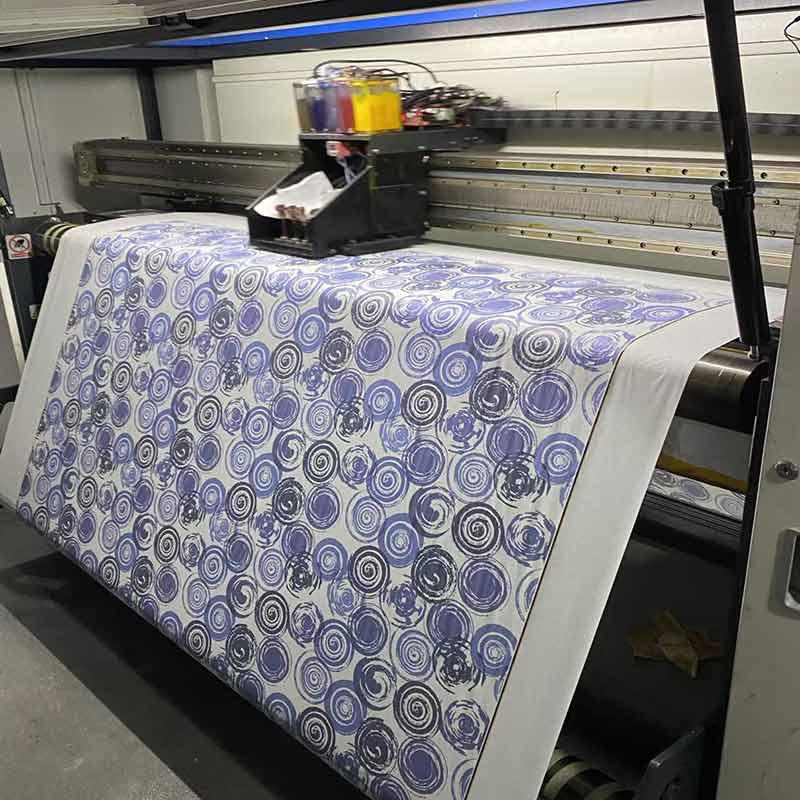
After the artwork is confirmed, the design is printed onto transfer paper. This paper carries the pattern before it moves onto fabric. In roll fabric printing, this step helps prepare the design for continuous transfer, especially when large fabric lengths or repeated patterns are needed.
For B2B buyers, this stage is important because it gives the factory a way to control the print before it reaches the fabric. Color, pattern direction, repeat size, and image clarity can be checked more effectively before the final transfer.
This is especially useful for brands that need consistent graphics across multiple garments or fabric batches. When the transfer paper is prepared correctly, the printing process becomes more predictable.
Heat And Pressure Move The Design Onto Fabric
The core of heat transfer printing is controlled heat and pressure. The printed transfer paper and fabric pass through heat transfer equipment, where the pattern is transferred onto the textile surface. In roller heat transfer, the process can support continuous roll-to-roll production, making it suitable for fabric printing orders that need steady output.
Our custom Heat Transfer Printing Services support fabric and apparel printing projects that need clear pattern transfer, stable production handling, and practical application across garments and textile products.
For buyers, the key point is that heat, pressure, speed, and fabric condition must work together. If one detail is not controlled well, the print may show uneven color, poor sharpness, weak transfer, or inconsistent results across the batch.
Why This Matters For Apparel And Fabric Buyers
Heat transfer printing is useful when buyers need detailed graphics, full-color effects, repeated patterns, or flexible fabric printing. It can be used for T-shirts, hoodies, polos, sportswear, yoga pants, functional workwear, cushions, curtains, tablecloths, and other textile applications.
For apparel brands, this helps create more visual variety without relying only on traditional Screen Printing. For fabric buyers, it supports pattern development before garments are cut and sewn. For project suppliers, it can help prepare printed fabric in a more organized way before the next production step.
This is why the process should be planned around the final use. A fashion logo, a sportswear pattern, a reflective detail, and a home textile print may all need different fabric handling and testing.
Sampling Helps Avoid Bulk Order Problems
Before bulk production, sampling is important. A sample allows the buyer to check whether the print color, position, clarity, and fabric feel match the expected result. It also gives the factory a chance to confirm whether the artwork and fabric can work smoothly in production.
Skipping this step can create problems later. A color may look different on fabric than on screen. A pattern may need scale adjustment. A fabric may stretch or react differently during transfer. These issues are easier to fix during sampling than after a large fabric order has already started.
For brands preparing custom garments, sample approval should focus on three things: whether the print looks right, whether the fabric still feels suitable, and whether the effect can be repeated in bulk.
Conclusion
Heat transfer printing works by preparing artwork, printing the design onto transfer paper, and transferring the pattern onto fabric through controlled heat and pressure. For B2B buyers, the process is valuable because it can support detailed graphics, flexible fabric printing, and repeatable production when the artwork and material are reviewed properly.
For brands or fabric buyers planning custom printed apparel, the best starting point is not only the design file. It is the full printing requirement: fabric type, pattern size, color target, application, and expected production quantity. When these details are clear from the beginning, heat transfer printing can move from sample approval to bulk production with fewer revisions and fewer delays.
Previous: What Is Silk Screen Printing?